
United States Regiments & Batteries > Pennsylvania > 48th Pennsylvania Infantry Regiment
The 48th Pennsylvania Infantry Regiment mustered a total of 858 officers and enlisted men in the American Civil War. Many of the men had served in several of the three months regiments at the very beginning of the war. A large number of the men had been miners.
The regiment lost 11 officers and 145 enlisted men killed or mortally wounded and 3 officers and 142 enlisted men to disease.
There is a monument to the 48th Pennsylvania at Antietam. There are also three monuments to the 48th Pennsylvania at Petersburg, Virginia, including the main 48th Pennsylvania monument, Entrance to Mines, and Crater of Mine.
|
1861
|
||
| September | The 48th Pennsylvania Infantry Regiment was organized at Harrisburg under the command of Colonel James Nagle, Lieutenant Colonel David Smith and Major Joshua Sigfried.
Organization of the regiment
|
|
| September 24-25 | Ordered to Washington via the Northern Central Railroad, but redirected at Baltimore to proceed to Fortress Monroe, Va. on the steamer Georgia | |
| September 26 | Landed at Fortress Monroe | |
| November 11 | Sailed for Fort Clarke, Hatteras Inlet, on steamer S. R. Spaulding | |
| November 30 | Lt. Colonel David Smith resigned. Major Joshua Sigfried was promoted to lieutenant colonel, Captain David Nagle of Company D to major, and First Lieutenant William W. Potts to Captain of Company D. | |
|
1862
|
||
| March 14 | Companies A, B, C, D, H and I at New Berne, N. C., attached to 1st Brigade, 2nd Division, Dept. North Carolina | |
| May 23 | The regiment was reunited at New Berne and attached to Williams Brigade, Burnside’s North Carolina Expedition. The Harpers Ferry rifle-muskets originally issued were replaced by Enfield rifles. | |
| July 6-8 | Moved to Fortress Monroe and attached to 1st Brigade, 2nd Division, 9th Corps, Army of the Potomac | |
| July 26 | Major David Nagle resigned. Captain Kaufman of Company A was appointed acting major | |
| August 2-4 | Left Newport News for Aquia Creek and moved by rail to Fredericksburg | |
| August 12 | Lieutenant George Gressang drowned in the sinking of the West Point | |
| August 13 | Joined Pope at Culpeper, Va. | |
| August 16-September 2 |
Pope’s Campaign in Northern Virginia |
|
| August 28 |
Battle of Groveton (Brawner Farm) |
|
| August 29-30 |
Second Battle of Bull Run (Second Manassas)Captain H. A. M. Filbert of Company I and six other men were killed, 61 were wounded, and 74 missing. First Lieutenant Isaac F. Brannan was promoted to Captain of Company I. |
|
| September 1 |
ChantillyThe regiment had two men slightly wounded |
|
| September 6-24 |
Maryland CampaignAttached to 1st Brigade, 2nd Division, 9th Corps, Army Potomac |
|
| September 10 | Colonel Nagle was promoted to brigadier general. Lieutenant Colonel Sigfried commanded the regiment. | |
| September 13 | Reached Middletown, having marched from Washington via Leesboro and Frederick | |
| September 14 |
Battle of South MountainThe regiment fought at Fox’s Gap, firing off all its ammunition while positioned behind a rail fence which limited its casualties to 11 men wounded and 1 missing. |
|
| September 16-17 |
Battle of AntietamThe regiment was commanded by Lieutenant Colonel Sigfried. It was engaged at Burnside’s Bridge and on the slopes below the town. losing Lieutenant William Cullen of Company E and 7 other men were killed, 51 men wounded and 1 man missing. From the War Department marker at Burnside’s Bridge at Antietam:At daylight of the 17th Nagle’s Brigade was about a half mile northeast of this point. It moved to the south and, at 10 A.M., was formed for assault on the bridge. The 2nd Maryland took position in the old lane 110 yards southeast of this point, and the remainder of the Brigade under cover of the hill and in rear of the 2nd Maryland. At 11 A.M. the 2nd Maryland, closely followed by the 6th New Hampshire, both moving by the flank, charged down the hill under a heavy fire of artillery and musketry. They passed through the opening in the fence at this point and reached within 250 feet of the bridge, when their advance was checked. Many of the men took shelter behind the fences and trees bordering the stream, and supported Ferrero’s Brigade in its successful assault. The Brigade then crossed the bridge, filed to the left, and occupied the high ground beyond. Late in the day it moved forward and co-operated in checking the advance of the right of A.P. Hill’s Division. From the War Department marker along Branch Avenue at Antietam:The Brigade assisted in carrying the Burnside Bridge, and crossed it soon after 1 P.M. After the repulse of the three Divisions of Willcox, Scammon and Rodman later in the day Ferrero’s and Nagle’s Brigades advanced to the crest of the ridge about 420 yards east of this to check Confederate pursuit. The 48th Pennsylvania supported and relieved the 51st Pennsylvania, engaging the Confederates posted on this line and behind the stone walls right and left of this point. The engagement continued into the night, and the Regiment and Brigade bivouacked on the ground on which they had fought. |
|
| September 20 | Lieutenant Colonel Joshua Sigfried was promoted to colonel, Captain Henry Pleasants of Company C to lieutenant colonel and Captain James Wren of Company H to major. First Lieutenant Ulysses A. Bast was promoted to Captain of Company B. | |
| October 7 | To Pleasant Valley, Md. | |
| October 27- November 17 |
Crossed the Potomac at Berlin and moved to Falmouth, Va. | |
| November 10 | Corbin’s Cross Roads, near Amissville | |
| December 12-15 |
Battle of Fredericksburg |
|
| December 30 | Captain John R. Porter of Company I was discharged. | |
|
1863
|
||
| January 8 | Captain William W. Potts was discharged. | |
| January 20-24 |
Burnside’s second Campaign (Mud March) |
|
| February | Duty at Falmouth | |
| February 11 | To Newport News | |
| March 26-April 1 | Moved to Baltimore on the steamer John A. Warner, then by rail to Covington, Ky. and assigned to Army of the Ohio | |
| April-September | Provost and guard duty at Lexington, Ky. | |
| May 20 | Major James Wren resigned. | |
| June | Attached to 1st Division, 23rd Corps. Army of the Ohio.Captain Philip Nagle of Company G resigned, and First Lieutenant Oliver Bosbyshell was promoted to Captain of Company G. | |
| July 28 | Captain Joseph Gilmour of Company H was promoted to major. | |
| August 28 | First Lieutenant William J. Hinkle was promoted to Captain of Company H and First Lieutenant Benjamin B. Schuck was promoted to Captain of Company I. | |
| September 1 | First Lieutenant Peter Fisher was promoted to Captain of Company D. | |
| October 4 | At Knoxville, Tenn. Attached to 1st Brigade, 2nd Division, 9th Corps, Army of Ohio, with Colonel Joshua Sigfried in command of the brigade, Lt. Colonel Henry Pleasants on General Hartsuff’s staff, and Major Joseph Gilmour in command of the regiment. | |
| October 10 | Blue Springs, Tenn. | |
| November 4-December 23 |
Knoxville Campaign |
|
| November 16 |
Campbell’s Station |
|
| November 17-December 5 |
Siege of Knoxville |
|
| December 5-29 | Pursuit of Longstreet | |
| December 7 | Regiment reenlisted at Blain’s Cross Roads and went on Veteran’s Furlough. | |
|
1864
|
||
| January 1 | First Lieutenant George W. Gowen was promoted to Captain of Company C. | |
| March 14 | Left Pottsville, Pa. | |
| March-April | At Annapolis, Md., assigned to Army of the Potomac. The regiment received Springfield rifles to replace its Enfields | |
| April 23 | Left Annapolis | |
| April 25 | Review before the President in Washington | |
| May 4-June 12 |
Rapidan Campaign |
|
| May 5-7 |
Battle of the Wilderness |
|
| May 8-21 |
Battle of Spotsylvania Court House |
|
| May 12 |
Assault on the SalientLieutenant Henry Jackson was killed. The regiment had lost 187 casualties since the 5th |
|
| May 21 | Stannard’s Mills | |
| May 23-26 |
North Anna River |
|
| May 26-28 | Line of the Pamunkey | |
| May 28-31 |
TotopotomoyLieutenant S. B. Laubenstine was killed, and Major Gilmour and Lieutenant William Hume were mortally wounded, all hit by sharpshooters. |
|
| June 1-12 |
Battle of Cold HarborThe regiment lost 75 casualties |
|
| June 1-3 | Bethesda Church | |
| June 16-18 |
First Assault on PetersburgA surprise assault at dawn on the 17th by the brigade captured 600 prisoners and four guns. The regiment lost 75 casualties , including Lieutenant Curtis Pollock, who was mortally wounded.
Private Robert Reid of Company G was awarded the Medal of Honor for the “Capture of flag of 44th Tennessee Infantry (C.S.A.).” |
|
| June 18 |
Siege of Petersburg |
|
| June 22-23 |
Jerusalem Plank Road |
|
| June 25-July 16 | Captain Benjamin Schuck of Company I was mortally wounded.Lieutenant Colonel Pleasants proposed laying a mine underneath the Confederate lines, which was accepted by high command.
From Lieutenant Colonel Pleasants’ official report on digging the mine:“It was commenced at twelve M., the 25th of June, 1864, without tools, lumber, or any of the materials requisite for such a work. The mining picks were made out of those used by our pioneers; plank I obtained, at first by tearing down a rebel bridge and afterwards by sending to a, saw-mill five or six miles distant, and the material excavated was carried out in hand-barrows, constructed of cracker boxes. The work progressed rapidly until the 2d of July, when it reached extremely wet ground. The timbers gave way, and the roof and the floor of the mine nearly met. I retimbered it and started again. From this point I had to excavate a stratum of marl, the consistency of which was like putty, and which caused our progress to be necessarily slow. To avoid this, I started an inclined plane, and in about one hundred feet rose thirteen and one-half feet, perpendicular.” See more about digging the mine at Petersburg from the wayside marker at the Crater. |
|
| July 17 |
From Lieutenant Colonel Pleasants’ official report:On the 17th of July the main gallery was completed, being five hundred and ten and eight-tenths feet in length. The enemy having obtained information of the mine, and ‘having commenced searching for it, I was ordered to stop operations, which were, however, re-commenced on the 18th of July, by starting the left lateral gallery… The mine was excavated by the enlisted men of the Forty-eighth Pennsylvania Regiment. As the excavation progressed the number required to carry out the earth increased, until, at last, it took nearly every enlisted man in the regiment, which consisted of nearly four hundred effective men. The whole amount of material excavated was eighteen thousand (18,000) cubic feet. The great difficulty to surmount was to obtain the exact distance from the entrance of the mine to the enemy’s works, and the course of these works. This was accomplished by making five separate triangulations with a the odolite and taking their mean. The triangulations were made in our most advanced line of works, and within one hundred and thirty three yards of the enemy’s line of sharp-shooters.” |
|
| July 21-23 | Captain O. C. Bosbyshell of Company G was promoted to major. Captain Peter Fisher of Company D was dismissed. | |
| July 27 |
From Lieutenant Colonel Pleasants’ official report on charging the mine:“Having received the order to charge our mine on the 27th of July, I commenced putting in the powder at four P. M., and finished at ten P. M. The charge consisted of three hundred and twenty kegs of powder, each containing about twenty-five pounds, [four tons.] It was placed in eight magazines, connected together by wooden tubes half filled with powder. These tubes met from the lateral galleries at the inner end of the main gallery, and from this point I placed three lines of fuses for a distance of ninety-eight feet. Not having fuses as long as required, two pieces had to be spliced together to make the requisite length of each of the lines. The tamping was begun at ten P. M., July 27th, and completed at six P. M., July 28th; thirty-four feet of main gallery was tamped, and ten feet of the entrance of each of the lateral galleries, but the space between the magazines was left clear of tamping.” |
|
| July 30 |
Mine Explosion, PetersburgFrom Lieutenant Colonel Pleasants’ official report on firing the mine:I received orders from corps headquarters, on the 29th of July, to fire the mine at half past three A.M., July 30th. I lighted the fuse at a quarter past three A.M., and having waited until a quarter past four without any explosion having taken place, an officer and a sergeant (Lieutenant Jacob Douty, company K, and Sergeant Henry Rees, company F) of the Forty-eighth Pennsylvania Regiment, volunteered to go in and examine into the cause of the delay. It was found that the fire had stopped where the fuses were spliced. They were re-lighted, and at sixteen minutes of five A. M., the powder exploded. The size of the crater formed by the explosion was at least two hundred (200) feet long, fifty (50) feet wide, and twenty-five (25) feet deep. I stood on top of our breastworks and witnessed the effect of the explosion on the enemy. It so completely paralyzed him, that the breadth of the breach, instead of being only two hundred feet, was practically four or five hundred yards. The rebels in the forts, both on the right and left of the explosion ran away, and for over an hour, as well as I could judge, not a shot was fired by their artillery. There was no fire from infantry from the front for at least half an hour; none from the left for twenty minutes, and but few shots from the right.” Having dug and set off the mine, the regiment did not participate in the battle. The battle was a disaster but the mine was a great success, and Lieutenant Colonel Henry Pleasants and the regiment were praised by General Meade. |
|
| August 1 | Captain Daniel B. Kaufman of Company A was dismissed. He was replaced by Captain Henry Boyer. | |
| August 18-21 |
Weldon Railroad |
|
| September 12 | First Lieutenant Richard M. Jones was promoted to Captain of Company G and First Lieutenant Francis Da Koch was promoted to Captain of Company I. | |
| September 29-October 2 |
Poplar Springs ChurchThe regiment lost 2 killed, 7 wounded and 47 prisoners |
|
| September 30-October 1 | Major Oliver Bosbyshell, Captain Henry Boyer of Company A, Captain Ulysses A. Bast of Company B, Captain William Winlack of Company E, and Captain Joseph H. Hoskings of Company F mustered out at the expiration of their terms of service. | |
| October 6 | Captain Isaac F. Brannan of Company I mustered out at the expiration of his term of service. | |
| October 11 | Colonel Joshua Sigfried mustered out at the expiration of his term of service. | |
| October 27-28 | Boydton Plank Road, Hatcher’s Run | |
| October 30 | First Lieutenant Aldert C. Huckey of Company A, First Lieutenant Charles W. Schnerr of Company E, and First Lieutenant John L. Williams of Company F were promoted to Captain. | |
| November 28 | First Lieutenant Jacob F. Werner was promoted to Captain of Company D and First Lieutenant Francis A. Stitzer was promoted to Captain of Company K. | |
| December 11 | First Lieutenant Thomas P. Williams was promoted to Captain of Company B. | |
| December 18 | Lieutenant Colonel Henry Pleasants mustered out at the expiration of his term of service | |
| December 20 | Captain George Gowen of Company C was promoted to lieutenant colonel and Captain Isaac Brannon of Company K to major. | |
|
1865
|
||
| March 1-3 | Lt. Colonel George Gowen was promoted to colonel, Major Isaac Brannon to lieutenant colonel, First Lieutenant William Clark to Captain of Company C, First Lieutenant William Auman to Brevet Captain of Company G and First Lieutenant Alba C. Thompson to Captain of Company H. | |
| April 2 |
Fall of PetersburgColonel George Gowen and 9 other men were killed, Lieutenant Thomas Sillyman and 56 other men were wounded and 24 missing in the assault on Fort Mahone.
|
|
| April 3 | Occupation of Petersburg | |
| April 3-9 | March to Farmville | |
| April 20-24 | Moved to Petersburg and City Point | |
| April 26-28 | To Alexandria | |
| May 11 | Lt. Colonel Isaac Brannon was promoted to colonel and Captain Richard Jones of Company G to major. | |
| May 23 | Grand Review | |
| June | Duty at Washington and Alexandria | |
| June 3-4 | Major Jones was promoted to lieutenant colonel and Brevet Captain William Auman of Company G to Captain. | |
| June 21 | Quarter Master Jacob Wagner was promoted to major | |
| July 17 | The 48th Pennsylvania Infantry Regiment mustered out under the command of Colonel Issac Brannon, Lt. Colonel Richard Jones, and Major Jacob Wagner | |
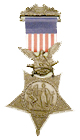 Corporal Patrick Monaghan of Company F earned the Medal of Honor for recapturing the colors of the